
Everything it actually takes to achieve a Euro summer...
One of our goals with Sandy is to show him as much of the world as possible. It really just boils down to knowing that we have ~10ish summers with him left, and we want to make them count.
That being said, taking your dog abroad can feel EXTREMELY overwhelming (*cue 3x mental breakdown, throwing a phone at Kev, calling 35+ vets to figure out how to do it see imaging below*). There's a bunch of contradictory advice online of what can and can't be done and strict government guidelines can make anyone stress out right before departure.
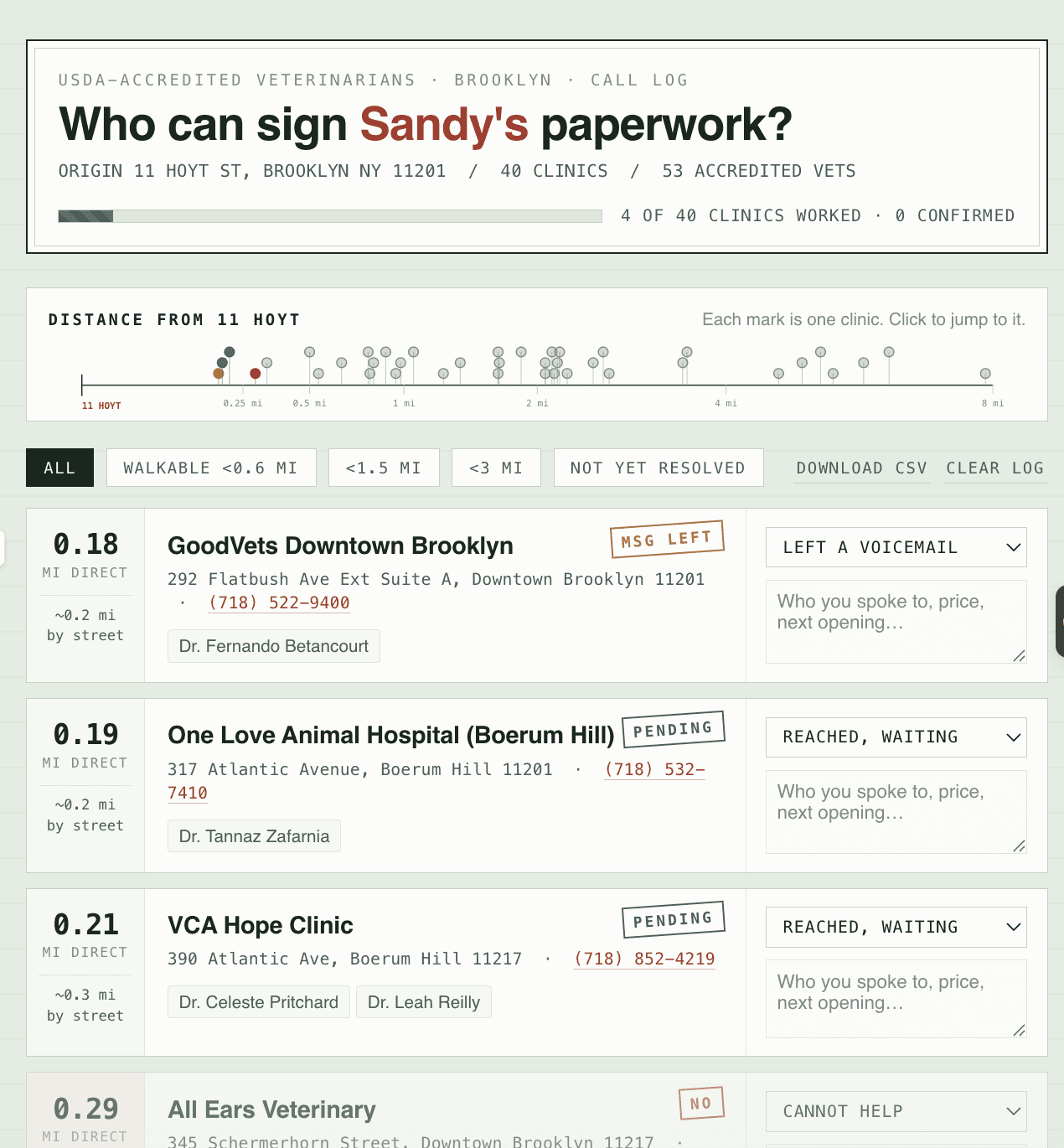
Having JUST navigated the entire shitshow of a process, I compiled everything I learned from USDA endorsement timing to landing in Copenhagen and wanted to write this as a reference to myself / others if it could be helpful. Use this step-by-step checklist to keep your dog's international travel smooth and stress-free. Ideally, I'll update this page with other destinations as we take Sanders along.
Timeline Tip: If there's anything I'd do-over its this! Start this process at least 30 days before departure. Managed to pull it together in 10 days, but it caused some gray hairs and starting a month out gives you a vital safety buffer if your dog is deficient in any of the items required.
Price Transparency: For a dog living in New York getting all of this completed ended up putting us back ~$1k. I had a friend reach out to say that a travel cert should only cost around $25 from a vet in Philly but I've called around ~35+ different vets with the 1 week turnaround and everything ranged from $500-$1500 so please start early and vet your vets (😉) to get the best pricing.
TL;DR: Border control ended up not checking any of Sandy's paperwork upon arrival (the officer + his supervisor who he double checked with said it was unnecessary and didn't need to check which is a bit irritating cause we just went this whole rigmorole). That said, because non-compliance can carry severe penalties like quarantine or euthanasia, having the physical forms were non-negotiable for my own peace of mind. Here is what you need:
1. ISO-Compliant Microchip
Requirement: Must be an ISO 11784/11785-compliant, 15-digit, non-encrypted microchip.
Critical Rule: The microchip must be implanted before or on the same day as the rabies vaccination. If the shot is given before the chip, the EU will not recognize the vaccine, and your dog will have to be re-vaccinated.
Vet Check: Always ensure the vet scans and records the microchip right before administering any shots.
2. Rabies Vaccination & 21-Day Waiting Period
Primary vs. Booster:
On-Time Booster: If your dog’s current rabies shot was given before the previous one expired, you're good to go immediately - there is no waiting period.
Lapse in Coverage = Primary Shot: If your dog's coverage lapsed even by a single day, the EU considers their latest shot a primary vaccination, not a booster. This triggers two strict rules:
21-Day Wait: You must wait at least 21 days after the shot before entering the EU.
1-Year Max Validity: It is only recognized for 1 year by the EU, even if your vet used a 3-year vaccine vial.
Action Item: Double-check your dog’s vaccine records early to ensure there are zero gaps in coverage. If there’s been a lapse, get a new shot immediately so the 21-day waiting period starts ticking. I also set a calendar reminder for his next booster so he stays 100% compliant and ready for our next trip!
3. USDA-Endorsed EU Health Certificate
This certificate functions as your dog’s official "EU entry visa."
Accreditation: Must be issued by a USDA-accredited veterinarian and then formally endorsed (signed and embossed) by USDA APHIS.
Timing Window: Your dog must land in the EU within 10 days of the USDA endorsement. Schedule your USDA paperwork right at the start of that 10-day window so you have ample time to receive the physical physical copy back via overnight mail.
4. Denmark Entry Rules & Banned Breeds
No Tapeworm Treatment Required: Unlike Finland, Ireland, Norway, or the UK, Denmark does not require tapeworm (Echinococcus multilocularis) treatment.
Banned Breeds Check: Denmark prohibits the import of 13 specific dog breeds (and their crossbreeds). Always verify your dog's breed compliance ahead of time.
5. Airline Requirements & Logistics
Book Early: Add your pet to your flight booking as early as possible, as airlines have strict limits on the number of animals allowed per cabin/flight.
Required Documentation: Beyond the EU Health Certificate, airlines may ask for additional documentation. For example, SAS required:
US DOT Service Animal / Pet Transportation Forms
A Relief Attestation Form
A signed liability waiver (this is something they did have me do at the gate)
Carrier & Weight Limits: Verify crate dimensions and weight caps for in-cabin or cargo transport directly on your airline’s website. Some airlines count your carrier as a personal item. Go to the airport with 2 hours to spare to check everything out.
What to Do Once You Land in Copenhagen
1. Register with a Local Danish Vet
Find a local clinic shortly after arrival. This gives you an immediate point of contact for emergencies or routine health checks (only necessary for us cause we're staying for 1 month and need a EU Passport).
2. Get an EU Pet Passport (Optional, but Highly Recommended)
Why Get One? An EU Pet Passport can only be issued by an accredited vet within the EU - it cannot be obtained in the US. It was suggested by my local vet in NYC for easier travel next time. The cost for this was ~$150.
The Benefit: If you plan on doing future intra-EU travel or returning to Europe, having an EU Pet Passport eliminates the need to pay for and coordinate a new USDA Health Certificate for every subsequent trip.
Disclaimer: Rules, airline procedures, and border inspections can shift over time. While this timeline worked smoothly for Sandy and me, always cross-reference your travel plan with the official USDA APHIS Pet Travel portal and Danish authorities prior to flying.
